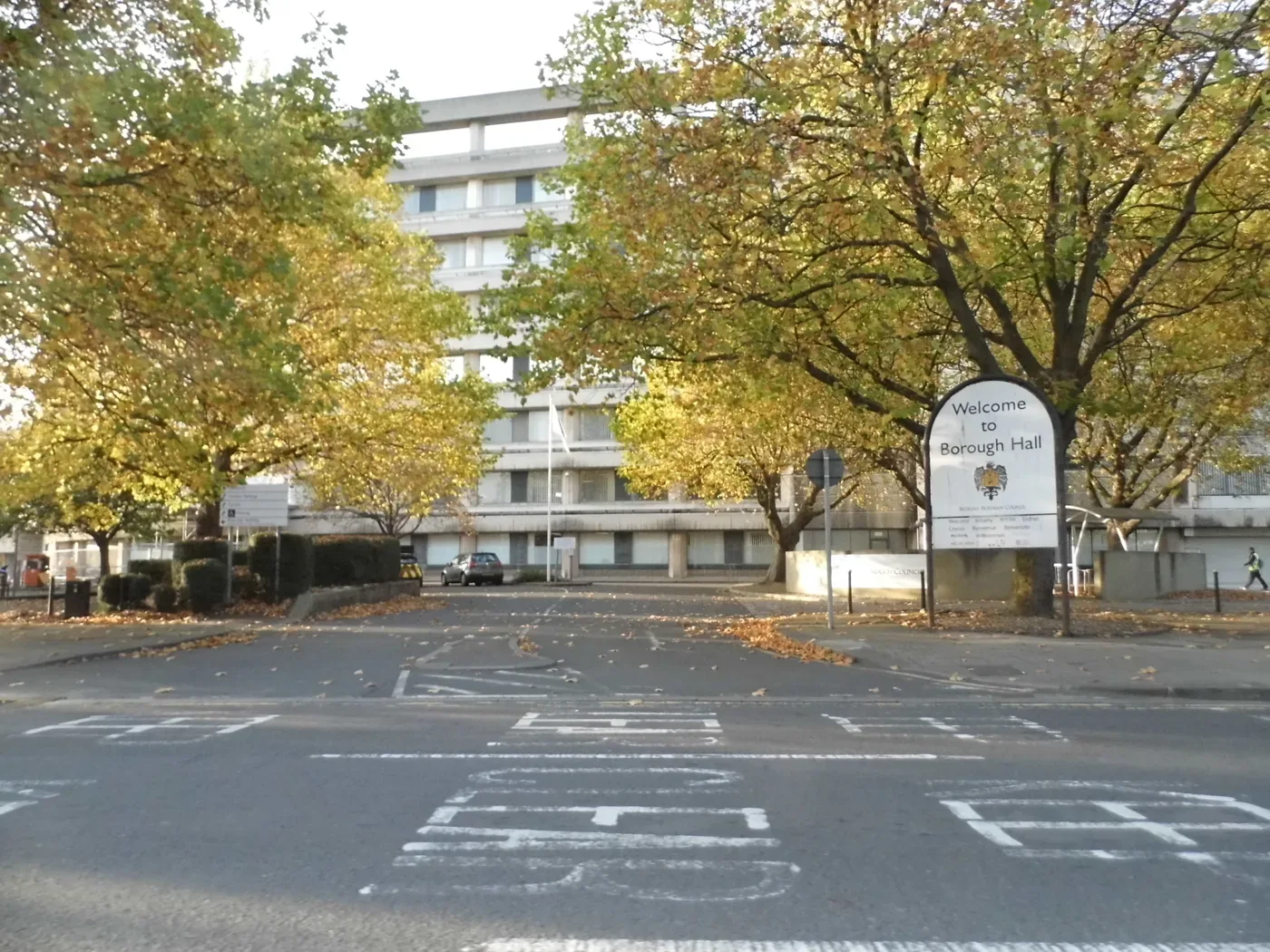

Bedford Borough Council adopted new planning referral rules on 11 November, with five safeguards. Residents will get a written way to ask for a hearing.
Bedford Borough Council has adopted its new rules on which planning applications go to councillors, with five extra safeguards added on the night. The most practical one for residents: within a month, the council must set up a written process for anyone to ask that a larger application be heard by the Planning Committee.
The decision was taken at an extraordinary Full Council meeting on Wednesday 11 November. The draft minutes, published on Tuesday, record both the amendment and the final motion as carried. The meeting lasted 52 minutes.
Overview
- Ward councillors still cannot call an application in, and objection numbers still do not send a case to committee. That is national law since 31 October.
- Larger (“Schedule 2”) applications can go to committee if two people agree they raise a significant issue: the Chair of the Planning Committee and the Head of Planning and Building Control.
- New: residents, parish and town councils and ward councillors will be able to ask those two to consider a case, in writing, through a process due within a month of 11 November.
- New: every properly made request gets a recorded decision with reasons, and a register of outcomes goes to each Planning Committee.
- The arrangements will be reviewed after six months.
What was added
The council had to adopt a scheme that complies with the Town and Country Planning (Discharge of Local Planning Authority Functions) (England) Regulations 2026. Councillor Vann moved the scheme recommended by the General Purposes Committee, and Councillor Oliver seconded it.
Councillor Frost then moved an amendment, seconded by Councillor Coombes. The minutes record it being carried. It adds five requirements to the scheme’s supporting procedures:
- A written request process, within a month. Ward members, parish and town councils and residents can ask the two nominated decision-makers to consider a Schedule 2 application. A request has to identify the significant planning matters, or the economic, social or environmental impacts, that justify a committee hearing.
- Published examples of “significant”. These must explain how significance is judged, including the cumulative effect of development on local infrastructure, highways, traffic, drainage, community facilities, villages and neighbourhoods, where those are material planning considerations.
- A recorded decision on every request, with reasons saying whether the legal criteria are met.
- A register of every assessment and outcome for Schedule 2 applications, reported to the next Planning Committee, with “appropriate information” made public.
- A review after six months, looking at the effect on local democratic accountability and on the ability of councillors, parishes and residents to raise significant concerns.
The amendment says none of this creates “any automatic right of referral contrary to those Regulations”. A request is a route to be considered, not a guarantee of a hearing.
What councillors said
The minutes summarise the debate rather than quoting it. They record support for the amendment’s aims, and concern about:
- the loss of councillor call-in rights
- fewer opportunities for parish councils and residents
- greater reliance on officer decisions
They also record a point made in the debate that the decision to withdraw the previous Local Plan, and the council’s resulting lack of a five-year housing land supply, had “also resulted in a loss of democracy”. Councillor Vann, summing up, agreed that the withdrawal had “most threatened local democracy”.
The minutes also note that neither the Chair of the Planning Committee nor the Head of Planning had been consulted on the amendment. Members backed it in principle because it formalised steps that were already being considered.
What it means for you
Until the written process is published, there is no formal form or route to ask for a hearing. The deadline set by the council is one month from 11 November, so by about 11 December.
If you plan to comment on a larger application before then, the existing advice still applies. Explain in your comment why the scheme is significant for the area, not just how many people object. Name the effect on roads, drainage, schools or the village, and the planning policies you think it breaches.
Extensions and small schemes of one to nine homes remain officer decisions whatever the objections.
The first two cases sent to councillors under the new national rules, up to 66 homes off Hall End Road in Wootton and a block at Daubeney Academy in Kempston, are on the Planning Committee agenda for Tuesday 24 November.
Have your say