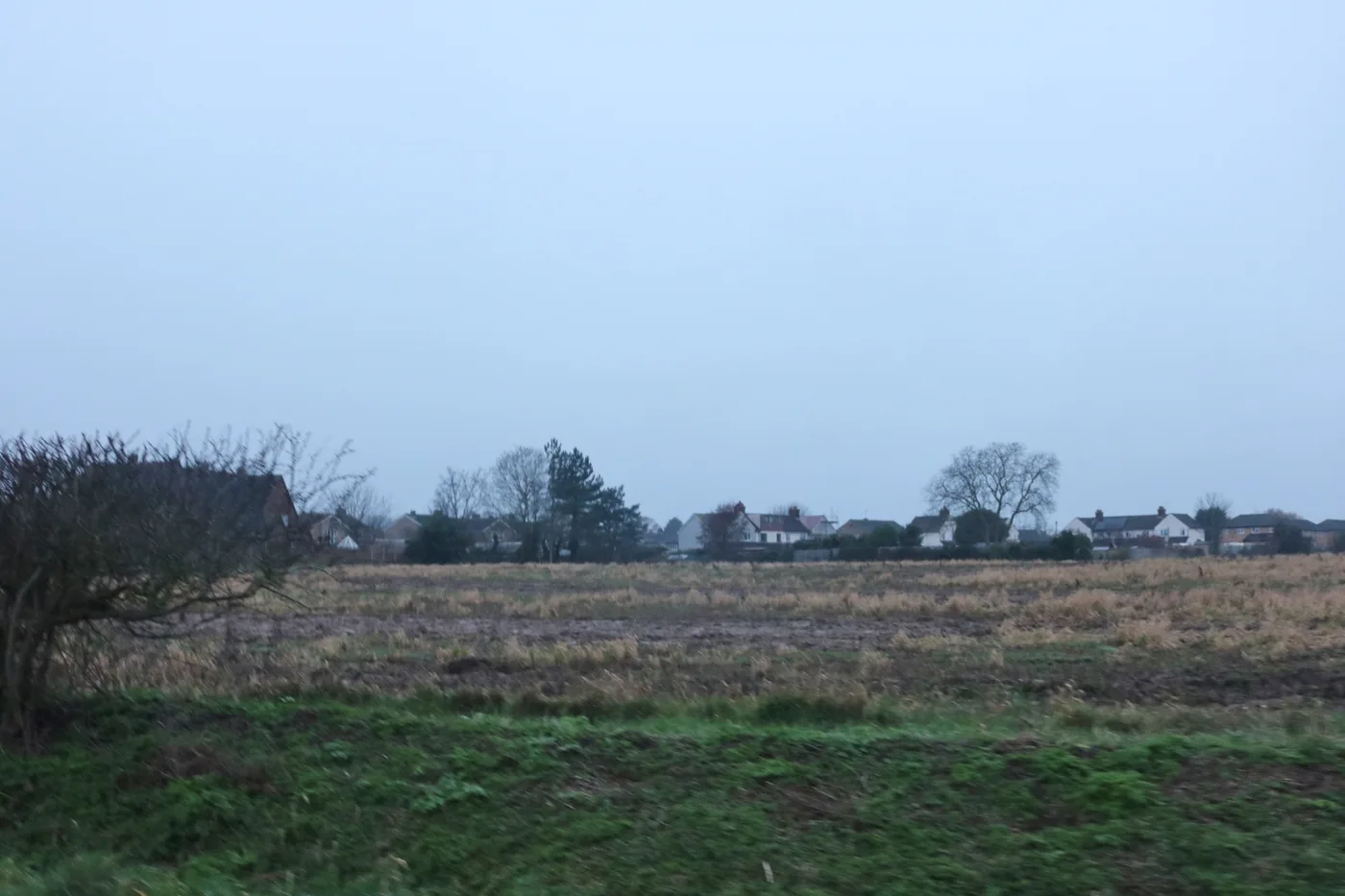

Councillors approved up to 500 homes at Millfield End on 14 September, with 20% affordable and £2.65m of the £5.98m asked for. The council owns a fifth.
Up to 500 homes on farmland at Great Barford, about five miles east of Bedford, have been approved. Bedford Borough Council’s Planning Committee granted outline permission on Monday 14 September, in line with the officers’ recommendation.
The draft minutes, published on 24 September, record that the principal planning officer had no updates to the report. The committee resolved to grant permission. The minutes do not record a vote count or any debate on the item.
It was approved on terms well below the council’s own policies. The scheme provides 100 affordable homes, where a policy-compliant 30% would deliver 150. It pays £2,650,000 towards schools and healthcare, against the £5,980,000 that consultees asked for.
The council is not a neutral party here. It owns part of the land and is a part promoter of the scheme, and it is also the authority that decided it.
This story was first published on 8 September as a preview of the meeting. It was updated on 25 September with the decision.
The application is 24/02391/MAO, searchable on the council’s planning register, outline permission with all matters reserved except access, at Millfield End, land to the west of Bedford Road. The case officer is James Croucher, and the officer report runs to more than 70 pages of the committee’s agenda pack.
Who owns the land
The site is being brought forward through a developer agreement between Axiom Great Barford Limited and Countryside Properties (UK) Limited, part of Vistry. They act for four landowners, and the report sets out the split:
- Davison & Co, 65%
- Bedford Borough Council, 20%
- Southall’s, 8%
- Harvey, 7%
Because the council is both part applicant and the local planning authority, the application cannot be decided by officers under delegated powers and has to go to committee. The report notes the Secretary of State has not called it in.
What is proposed
The site is 39.65 hectares of arable fields south west of the village, falling from about 41 metres above sea level in the west towards Great Barford at about 25 metres. It takes in two houses, a butcher’s shop and farm buildings at Home Farm off Coopers Close. It is allocated for housing in the Great Barford Neighbourhood Plan 2030, made in January 2022. The red line on this application is smaller than the allocation the plan draws.
Alongside the 500 homes, the outline application includes:
- around 22 hectares of public open space, 56% of the site, taking in play areas, a village green, a community orchard and allotments
- one full-size adult sports pitch, two tennis courts and a sports pavilion, all to be accessible to the wider village
- two new roundabouts on Bedford Road, plus a traffic regulation order to cut the speed limit
- a pedestrian, cycle and bridleway network linking to the village centre at the Golden Cross junction
- biodiversity net gain of 31.87% in habitat units, monitored for 30 years
- drainage basins around the site edges
The applicant’s own economic statement puts the build at roughly eight years and £126 million, supporting an average of 122 construction jobs a year, and projects a resident population of 1,262.
The viability argument, and what it costs
Bedford’s Local Plan asks for 30% affordable housing. This scheme offers 20%, which is 100 homes, split evenly between affordable rent and intermediate tenures.
The applicant submitted a viability assessment. The council instructed its own viability consultants to test it. Their conclusion, quoted in the report, is that 30% affordable housing “would not be financially viable on this site, even with nil Section 106 contributions”. At 20%, they say, £2,650,000 is the most the scheme can carry in Section 106 money.
The report also spells out the trade-off the other way. If the full £5,980,000 of requested contributions were paid, the viable affordable housing share would fall to 15%, which is 25 fewer affordable homes. Community Infrastructure Levy money, estimated at £7,600,000 here, can pay for schools and surgeries but cannot pay for affordable housing.
The exceptional cost the applicant points to is about £2.1 million to pipe foul water to the Bedford Water Recycling Centre instead of the nearer works at Great Barford.
The surgery and the school places
The two biggest single asks came from health and education, and neither is met in full.
The NHS consultee, named in the report as Bedfordshire Clinical Commissioning Group, said the development would add around 1,200 patient registrations to Great Barford Surgery. The surgery building, it said, “does not have sufficient space to absorb the additional patients”. It asked for £1,017,750 towards relocating the surgery. Officers recommend £850,000 be directed to healthcare, most appropriately the new Great Barford surgery project.
That project is real but not yet submitted. The council’s own page on the proposed Great Barford medical centre describes a single-storey building of about 540 square metres on the former Great Barford Lower School site in Silver Street. It would contain:
- six GP consulting rooms
- two treatment rooms
- a dispensary
- up to 42 car parking spaces
A design and build contractor has been appointed and designs are being developed. No planning application has gone in, and no construction date has been given. The existing surgery would close once services move across.
The council’s own education team asked for £4,626,274 across four headings:
| Purpose | Requested |
|---|---|
| Secondary school expansion or improvement | £3,107,095 |
| SEND capital | £673,738 |
| Early years | £645,441 |
| Great Barford Primary School, upgrading and refurbishment | £200,000 |
The recommendation is a single £1,800,000 payment to be applied flexibly across early years, primary, secondary and SEND. No post-16 contribution was sought.
No late-stage viability review
When a scheme is approved on reduced contributions, councils often attach a late-stage review, so that if it turns out more profitable than forecast the extra is recovered. Officers recommend against one here.
Their reasoning has three parts:
- this is an allocated site, one of only a handful left in the current development plan
- it carries demonstrable exceptional costs
- the application has been “stalled” for almost two years, first on technical matters and then on viability
Against what the report calls the imperative to accelerate housing supply in the borough, “on this occasion a late-stage viability review is not considered appropriate”.
What the village said
Great Barford Parish Council supports the application. It endorsed the Millfield End development brief and design code in July 2023. At its July 2024 planning meeting it resolved to take responsibility in principle for the open spaces once built, provided they are of adoptable standard.
Public response has been light. The council notified 72 neighbouring properties and put up a site notice in January 2025. Four responses objected, on grounds including loss of agricultural land, traffic, noise, flooding, density, three-storey housing and pressure on the doctor’s surgery. Three more raised similar concerns without objecting.
Among statutory consultees, National Highways initially recommended refusal for a holding period and then withdrew its objection in March 2025. Environmental Health objected on noise and said the objection could be lifted with more mitigation detail. The Environment Agency has no objection but says it cannot judge the effect on the water environment until Anglian Water’s plans for capacity at Great Barford Waste Water Treatment Works are clear.
What it means for you
This is outline permission only. The layout, appearance, scale and landscaping all come back later as reserved matters. That is a second chance to comment on what the houses actually look like, and on how the roundabouts, play areas and sports pitch are laid out. Work must begin within three years of the last reserved matters approval.
The permission will be formally issued once the Section 106 agreement carrying the £2,650,000 and the affordable housing is signed. Until then there is no decision notice on the planning register under 24/02391/MAO.
The rest of the 14 September agenda
The same meeting decided two other items, according to the minutes:
- RAF Cardington, Shortstown (23/00324/M73): refused, against the officers’ recommendation. The change was to the path planned along the disused railway line on the 250-home reserved matters scheme, proposed in Breedon gravel. The committee gave three reasons: the path would not be safe, robust or accessible for all ages and abilities; it fails to show how it would help deliver a future cycle route between Cardington and Harrowden Lane; and it fails to show sustainable drainage. Officers had corrected their own report on the night, accepting that Breedon gravel “is not permeable”. The committee heard from two objectors and Shortstown Parish Council.
- Queens Bridge, Stafford Road (26/01203/DC3): approved. This is a new footbridge on the existing foundations of the demolished bridge.
The fourth item, the children’s home application at 49 The Ridgeway in Goldington (26/00833/S73A), was withdrawn from the agenda before the meeting.
The committee chair asked how many call-in applications were waiting. The head of planning said there were 17, with eight listed for the 28 September meeting and two more committee meetings in October.
Our Bedford planning page covers how to comment and what else is in the pipeline across the borough.
Sources
- Report of the Head of Planning and Building Control, Planning Committee, 14 September 2026, Bedford Borough Council
- Planning Committee draft minutes, Monday 14 September 2026, Bedford Borough Council
- Planning Committee agenda, Monday 14 September 2026, Bedford Borough Council
- Planning Committee and the right to speak, Bedford Borough Council
- Great Barford Medical Centre: proposed development, Bedford Borough Council
- Great Barford Neighbourhood Development Plan, Bedford Borough Council
Have your say